When Was CPR Invented? Atlanta Guide
Modern CPR took shape in 1960, but the story starts much earlier. The major milestones explain how today’s CPR developed and why hands-on training still matters when you choose a class.


Modern CPR took shape in 1960, but the story starts much earlier. The major milestones explain how today’s CPR developed and why hands-on training still matters when you choose a class.
The Chain of Survival is the sequence that gives a person the best chance after cardiac arrest. Its six links show why early recognition, CPR, AED use, advanced care, post-arrest care, and recovery all matter.
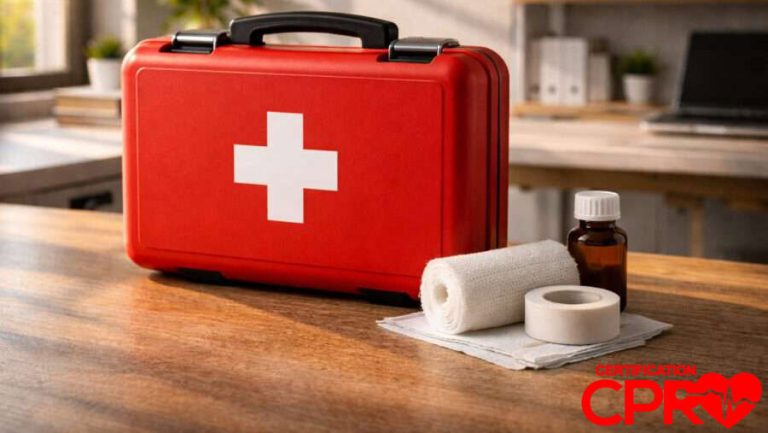
A first aid kit is only as good as its contents, location, and upkeep. A useful kit matches the setting, gets checked regularly, and stays stocked for the injuries most likely to happen.
The common fears are predictable: doing CPR wrong, hurting someone, legal worry, disease contact, and freezing under pressure. Training makes the response feel usable instead of overwhelming.
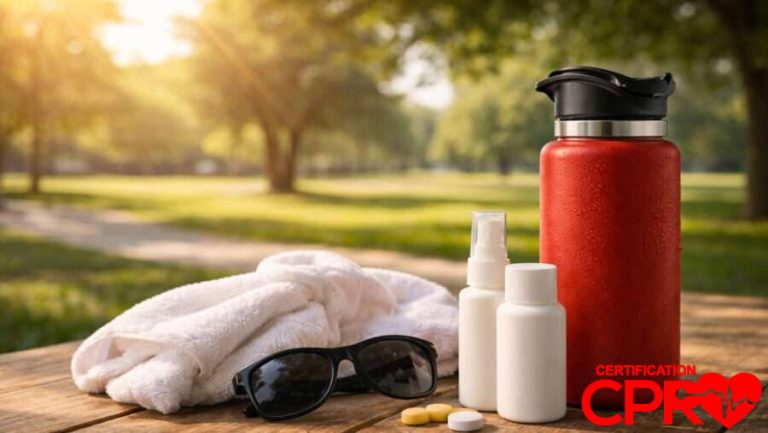
Heat exhaustion and heat stroke both involve overheating, but they are not the same emergency. The first-aid response changes once symptoms point toward heat stroke or a 911-level problem.

Verifying CPR certification means more than opening a digital card. Reviewers need to match the card to the requirement and keep training records clean enough to trust later.
Bloodborne pathogens certification usually refers to OSHA-required training or an employer needing proof that training happened. The important questions are what OSHA requires, who needs the training, and what counts as proof.
An allergic reaction is not automatically anaphylaxis, but the line matters because the response changes fast once breathing, circulation, or multiple body systems are involved.

Choosing the right CPR certification program gets easier once the choices are named clearly. A hands-on AHA BLS class is often the strongest choice, while First Aid works best as supplemental training.
Healthcare workers face blood exposure risk as part of normal job duties, not rare edge cases. The key questions are where exposure happens, which pathogens matter, and how post-exposure response works.
No products in the cart.